


Did you know? 1 in 5 children who touch a digital device will be sexually solicited online.
Technology is a powerful tool for learning, creativity, and connection, but it also comes with risks. During Internet Safety Month, it’s important for families to have ongoing conversations about how to stay safe online. The good news? Prevention starts with education, communication, and awareness.
Here are some simple, practical ways to help children and teens navigate the digital world safely and confidently.
1. Start the Conversation Early
Children are using devices younger than ever before. Create an environment where your child knows they can come to you with questions, concerns, or uncomfortable experiences online without fear of punishment or shame.
Try saying:
- “If anything online ever makes you uncomfortable, you can always tell me.”
- “You will never get in trouble for asking for help.”
- “Not everyone online is who they say they are.”
2. Keep Personal Information Private
Teach children never to share:
- Full name
- Home address
- School name
- Phone number
- Passwords
- Live location
- Photos that reveal identifying information
Remind children: Once something is shared online, it can be difficult, or even impossible, to fully erase.

3. Use Strong Privacy Settings
Review apps, games, and social media accounts together.
Set profiles to private whenever possible and regularly check:
- Friend and follower lists
- Location-sharing settings
- Direct messaging permissions
- App permissions and data access
4. Know the Apps Your Child Uses
Popular apps change constantly. Stay informed about:
- Messaging features
- Disappearing messages
- Livestream capabilities
- Anonymous chat functions
- In-app purchases
- Age restrictions
A good rule: If your child has an app on their phone, you should understand how it works.
5. Talk About Online Grooming
Online predators often use games, social media, and messaging apps to build trust with children over time.
Warning signs may include:
- Requests for secrecy
- Excessive compliments or gifts
- Attempts to move conversations to private platforms
- Asking for photos or videos
- Encouraging isolation from trusted adults
Teach children: “Safe adults never ask children to keep secrets.”
6. Talk About Sextortion
Sextortion is a growing form of online exploitation in which someone manipulates, threatens, or blackmails a child or teen into sending explicit images, money, or more content.
Often, offenders pretend to be another teen online and quickly build trust before asking for photos. Once an image is shared, they may threaten to expose it unless the child sends more images or money.
Children and teens should know:
- It is never their fault if someone manipulates or threatens them online.
- They should stop communicating immediately and tell a trusted adult.
- They should never send money or additional images.
- Help is available, and they are not alone.
Warning signs may include:
- Sudden secrecy around devices
- Anxiety after being online
- Panic about photos or social media
- Requests for money or gift cards
- Withdrawal from friends or family
Remind children: “If someone threatens you online, tell a trusted adult right away. You will not be in trouble.”

7. Create Family Digital Rules
Healthy boundaries help keep kids safe online.
Consider creating rules around:
- Screen-free bedrooms at night
- Approved apps and downloads
- Time limits
- Social media age requirements
- Sharing photos and videos
- What to do if something feels unsafe
Consistency matters more than perfection.
8. Think Before You Post
Help children understand their digital footprint.
Ask:
- Would I say this in person?
- Could this hurt someone?
- Would I be okay with a teacher, parent, or future employer seeing this?
Kindness, empathy, and respect matter online too.
9. Watch for Cyberbullying
Cyberbullying can happen through:
- Text messages
- Gaming platforms
- Group chats
- Social media comments
- Fake accounts or rumors
Encourage children to:
- Block and report harmful behavior
- Save screenshots
- Tell a trusted adult immediately
10. Remember: Telling Is Reporting, Not Tattling
If a child experiences:
- Harassment
- Threats
- Inappropriate messages
- Requests for photos
- Online exploitation
- Bullying
They should tell a trusted adult right away.
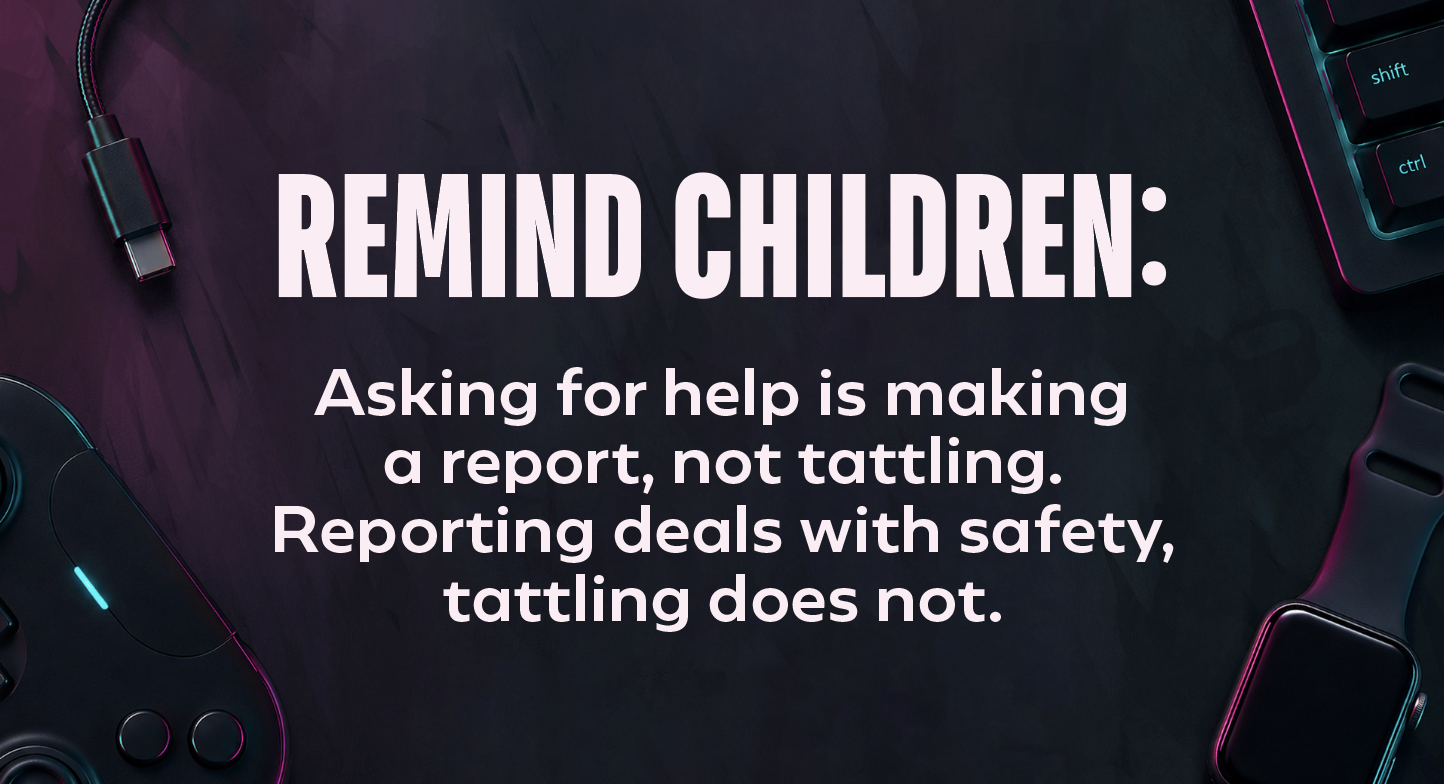
Asking for help is making a report, not tattling. Reporting deals with safety. Tattling does not.
11. Model Healthy Digital Behavior
Children learn from watching adults. Practice:
- Respectful online communication
- Balanced screen time
- Fact-checking information
- Healthy boundaries with technology
Quick Digital Safety Checklist
✅ Keep devices updated
✅ Use strong passwords and two-factor authentication
✅ Review privacy settings regularly
✅ Know your child’s apps and games
✅ Keep communication open and judgment-free
✅ Report suspicious or unsafe behavior
Digital safety is not about fear. It’s about empowering children with the knowledge, confidence, and support they need to make safe choices online. By keeping communication open and staying involved in your child’s digital life, families can help create safer online experiences for everyone.
 English
 Spanish