

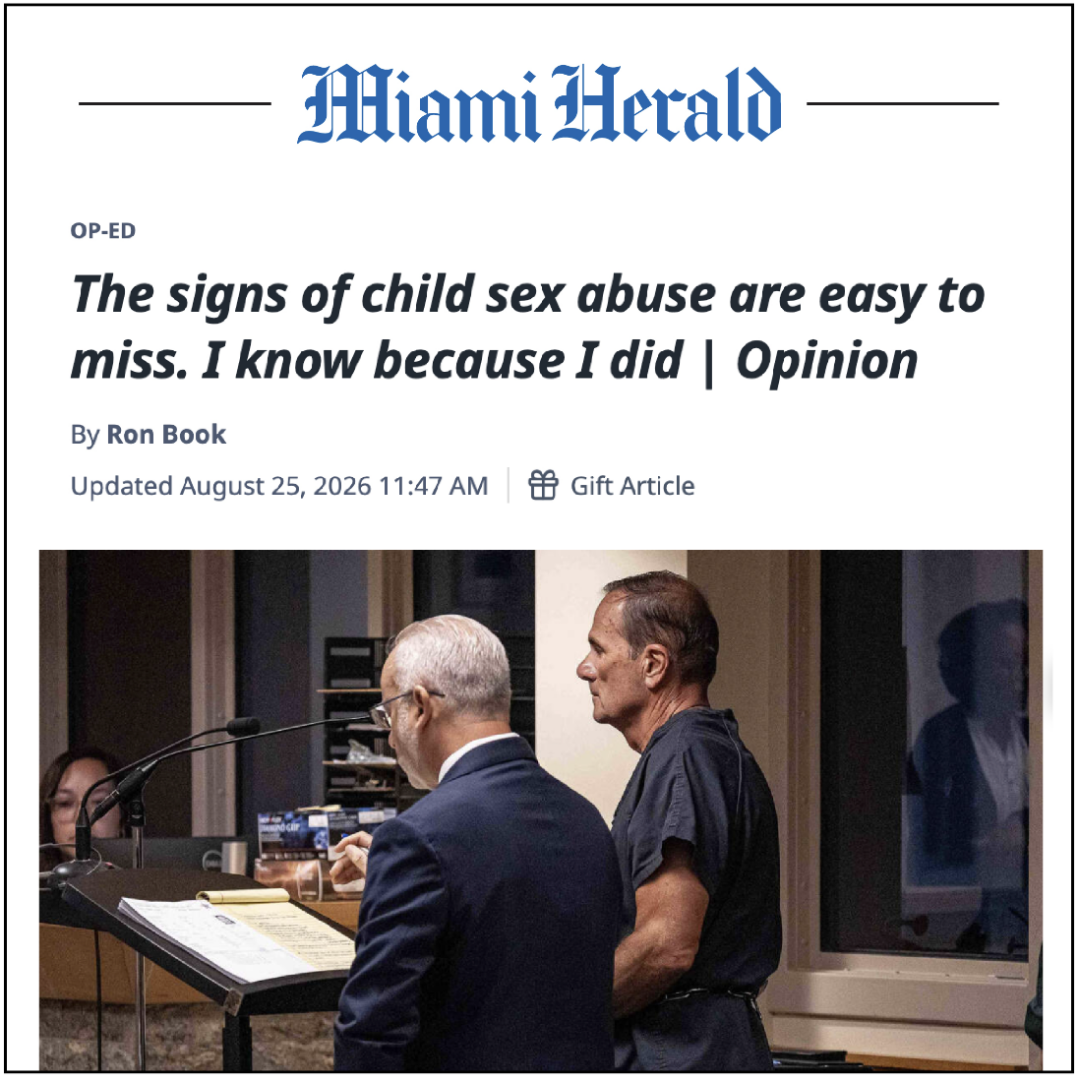
The allegations against former Palm Beach County Clerk of Courts Mike Caruso are horrifying.
As a father, grandfather and someone who has spent decades working to protect children from sexual abuse, I keep coming back to one painful reality: Sometimes parents and family members miss the signs.
I know because I did. My daughter, Lauren, was sexually abused as a child by someone we trusted to live in our home and help care for our children. It went on for years, right under our roof, and I didn’t know.
There is no easy way for a father to write that sentence.
Child sexual abuse rarely looks the way we imagine it will. We teach children to be careful around strangers, but the overwhelming majority of children who are sexually abused know the person who hurts them. It may be a relative, coach, teacher, caregiver or family friend, but it is most always someone the child and their parents or caregivers trust.
The allegations against Caruso are a painful reminder of how grooming can work: Trust is built, boundaries are tested and then crossed, and ordinary interactions can be used to create opportunities for isolation and abuse.
The circumstances investigators describe should make every parent and grandparent stop and think. We cannot decide someone is safe simply because we’ve known them for years, they’re respected in the community or our children seem to like them. We have to look at their behavior. They don’t advertise who they are anymore than a masked bank-robber — so when warning signs or allegations do surface, we must take them seriously. Where there’s smoke, we have a responsibility to look for fire; and in Caruso’s case, publicly available allegations dated back to at least 2012.
Ask yourself: Is an adult repeatedly seeking opportunities to be alone with a child? Giving one child unusual attention? Ignoring physical boundaries or disguising inappropriate touching as games, wrestling or joking? Encouraging secrets? Has your child’s behavior around that person changed?
Any one of those things may have an innocent explanation, but they are reasons to pay attention, ask questions and listen to what your child or grandchild may report.
Children need to know they can tell us when something doesn’t feel right — even when it involves someone they know and love — and to keep telling until they are heard and helped.
Read more at the Miami Herald online: https://www.miamiherald.com/opinion/op-ed/article316993333.html#storylink=cpy
 English
 Spanish